
Kids Karate Classes in Dubai That Build Confidence, Discipline and Strong Character
Give your child a structured, positive introduction to Shotokan karate. Our beginner-friendly kids karate classes combine technical learning, physical development, character education, belt progression and optional competition opportunities at our Dubai Silicon Oasis and Al Nahda-2 branches.
A Positive Activity for the Body, Mind and Character
Karate gives children a structured environment in which they can practise focus, physical coordination, respectful behaviour, perseverance and responsible goal-setting. Every child develops differently, so instructors guide progress according to age, experience, confidence and ability.
Confidence Through Progress
Children gain genuine confidence by learning a technique, correcting mistakes, remembering a kata sequence and recognising gradual improvement—not through empty praise.
Focus and Listening
Students observe demonstrations, follow multi-step instructions and practise movements with attention. These routines can support better learning habits over time.
Respect and Discipline
Bowing, class etiquette, punctuality, careful partner work and regular practice help children understand responsibility and consideration for others.
Fitness and Coordination
Warm-ups, stances, footwork, kicks and controlled combinations develop balance, flexibility, stamina, strength and whole-body coordination.
Self-Control and Safety
Children are taught to control movement, power and reactions. Partner training is introduced progressively with clear rules and instructor supervision.
Goals and Achievement
Belt milestones, gradings and optional competitions give motivated students meaningful goals while keeping personal development at the centre of training.
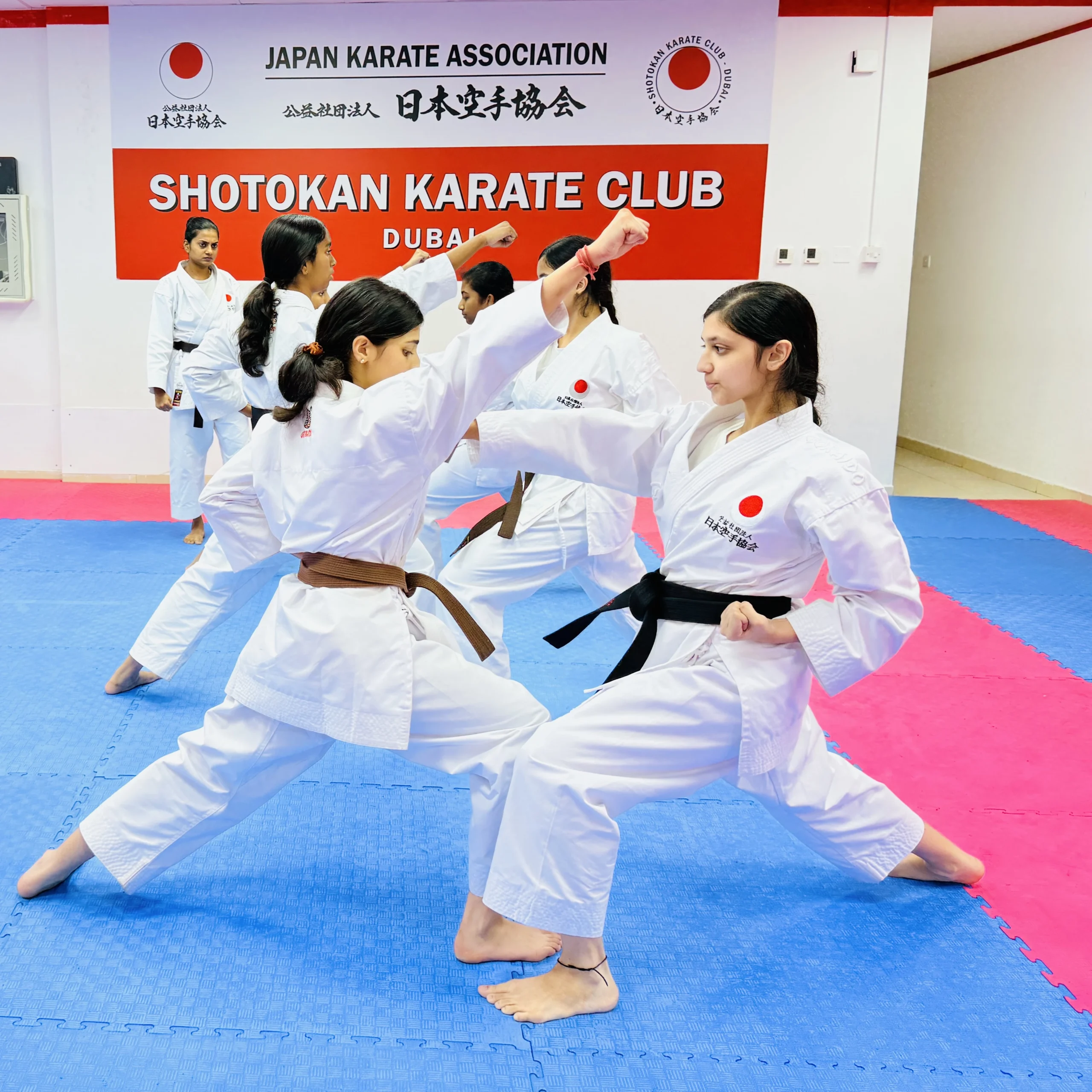
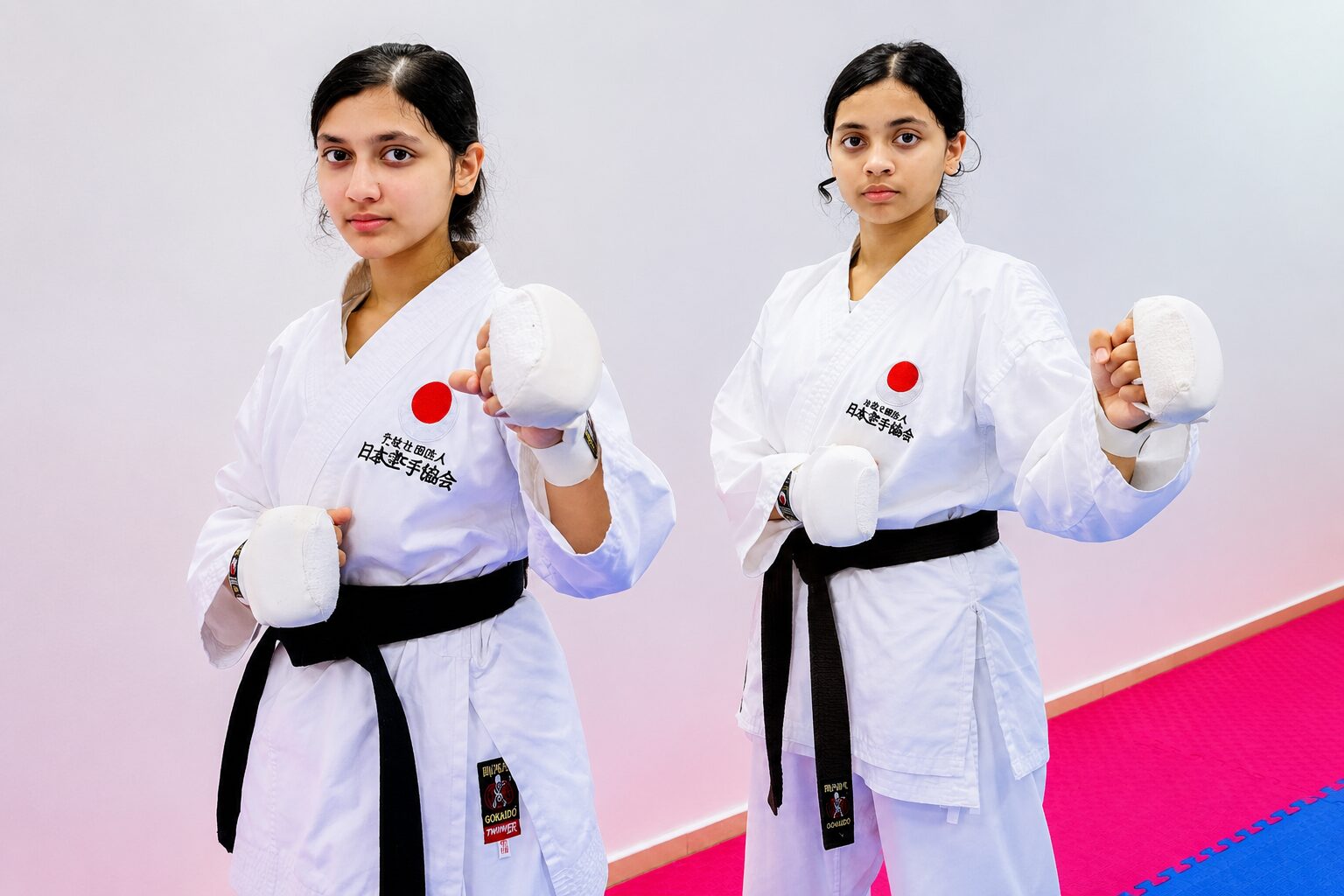
From the First Trial Class to Lifelong Development
The journey is progressive rather than rushed. Children first learn how to participate safely, then build habits, technical ability, confidence and responsibility through regular training.
The Six Pillars of Karate Character
Character is practised through training routines, feedback, repetition and responsibility. It is not presented as a guaranteed result or a replacement for parenting, school support or professional care.
1. Respect
Listening to instructors, greeting classmates appropriately, protecting training partners and valuing the dojo environment.
2. Discipline
Attending regularly, following class routines, practising carefully and understanding that progress comes through consistency.
3. Confidence
Learning achievable skills, demonstrating techniques and becoming comfortable participating in a supportive group.
4. Focus
Observing demonstrations, remembering sequences and completing exercises with sustained attention.
5. Resilience
Repeating difficult techniques, accepting corrections and continuing to work after mistakes or setbacks.
6. Self-Control
Managing movement, power, behaviour and emotional reactions during individual and partner practice.
Karate Training for Different Stages of Childhood
Children of the same age can still have different confidence, coordination and learning needs. These age pathways describe our general emphasis, while instructors adapt exercises to the individual group.
Ages 4–6
Foundations & Participation- Simple instructions
- Balance and coordination
- Taking turns
- Basic etiquette
- Confidence joining a group
Ages 7–9
Habits & Self-Control- Class routines
- Basic combinations
- Safe partner work
- Short-term goals
- Consistent attendance
Ages 10–12
Skills & Responsibility- Kata memory
- Technical corrections
- Grading preparation
- Teamwork
- Leadership foundations
Ages 13–17
Growth & Leadership- Advanced fundamentals
- Long-term goals
- Emotional control
- Helping juniors
- Competition preparation
What Happens in a Kids Karate Class?
Each session combines activity, technical learning and structured discipline. The exact content changes according to the age group, level and training focus.
| Class Stage | What Children Do | Development Purpose |
|---|---|---|
| Welcome & Bowing | Line up, greet the instructor and prepare to train. | Respect, readiness and class routine. |
| Warm-Up | Mobility, stretching, coordination, movement and fitness exercises. | Physical preparation and injury awareness. |
| Kihon — Basics | Practise stances, punches, blocks, kicks and footwork. | Technique, posture, balance and control. |
| Kata | Learn and repeat formal movement sequences. | Memory, focus, precision and rhythm. |
| Partner Drills | Age-appropriate distance, timing and controlled kumite exercises. | Awareness, cooperation and self-control. |
| Review & Cool Down | Recap the lesson, receive feedback and finish respectfully. | Reflection, calmness and next-step guidance. |
A Clear Journey from White Belt to Black Belt
Belts provide visible milestones, but they are not automatic rewards. Students prepare through attendance, syllabus practice, technical improvement and readiness for grading. The time needed varies by student.
Correct club pathway: White → Yellow → Orange → Green → Blue → Purple → Brown → Black.
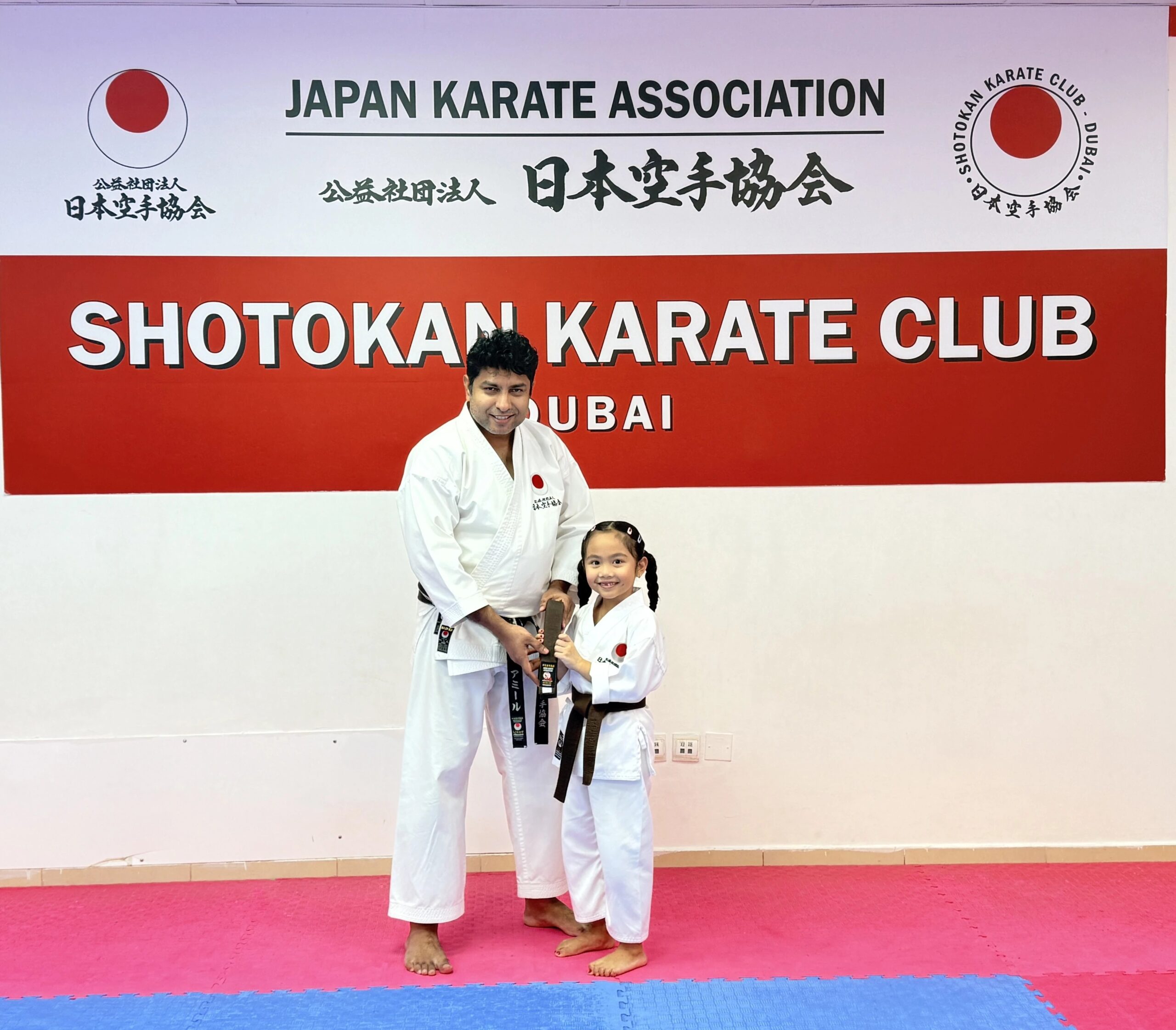
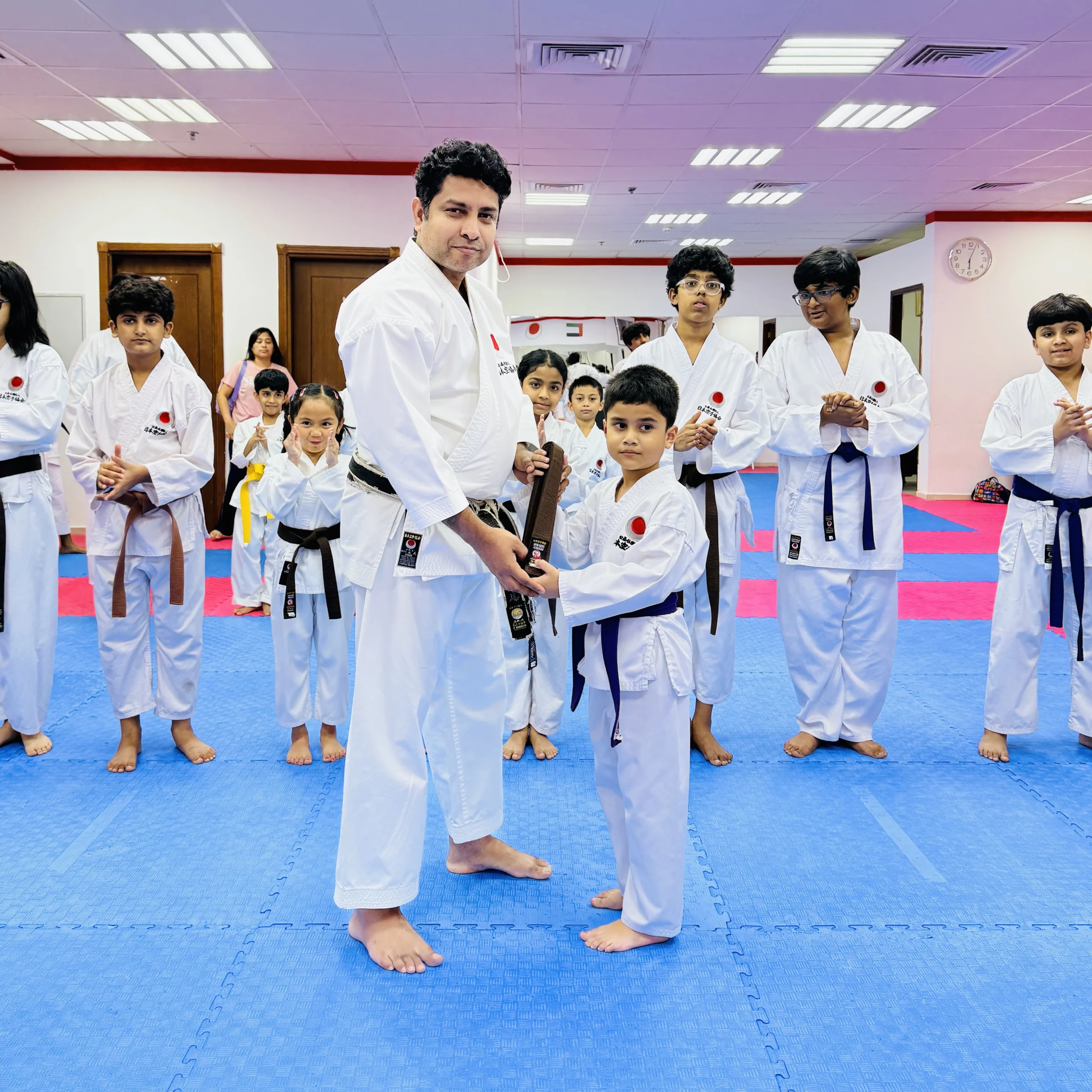
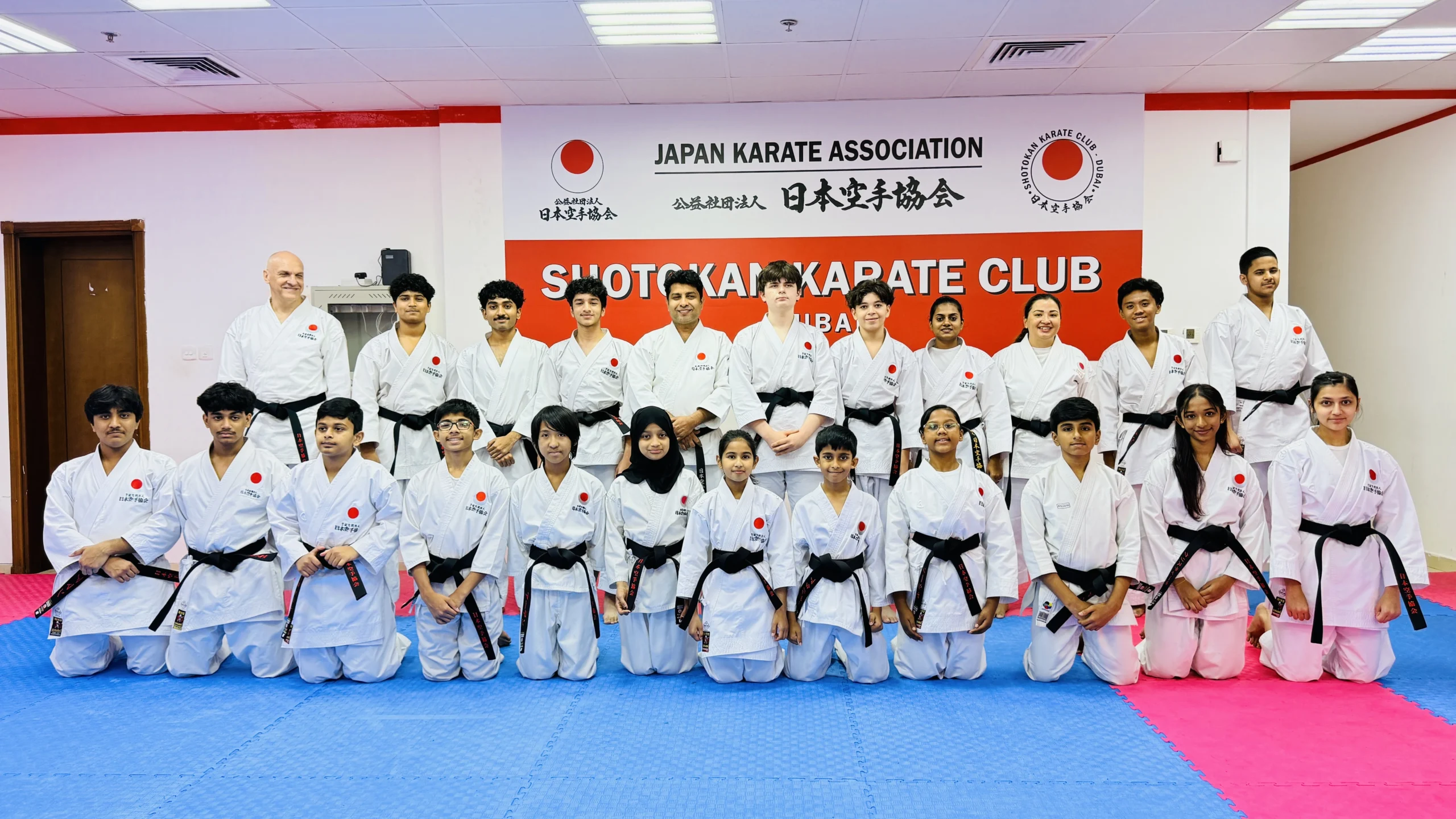
Real Students. Real Progress. Real Achievement.
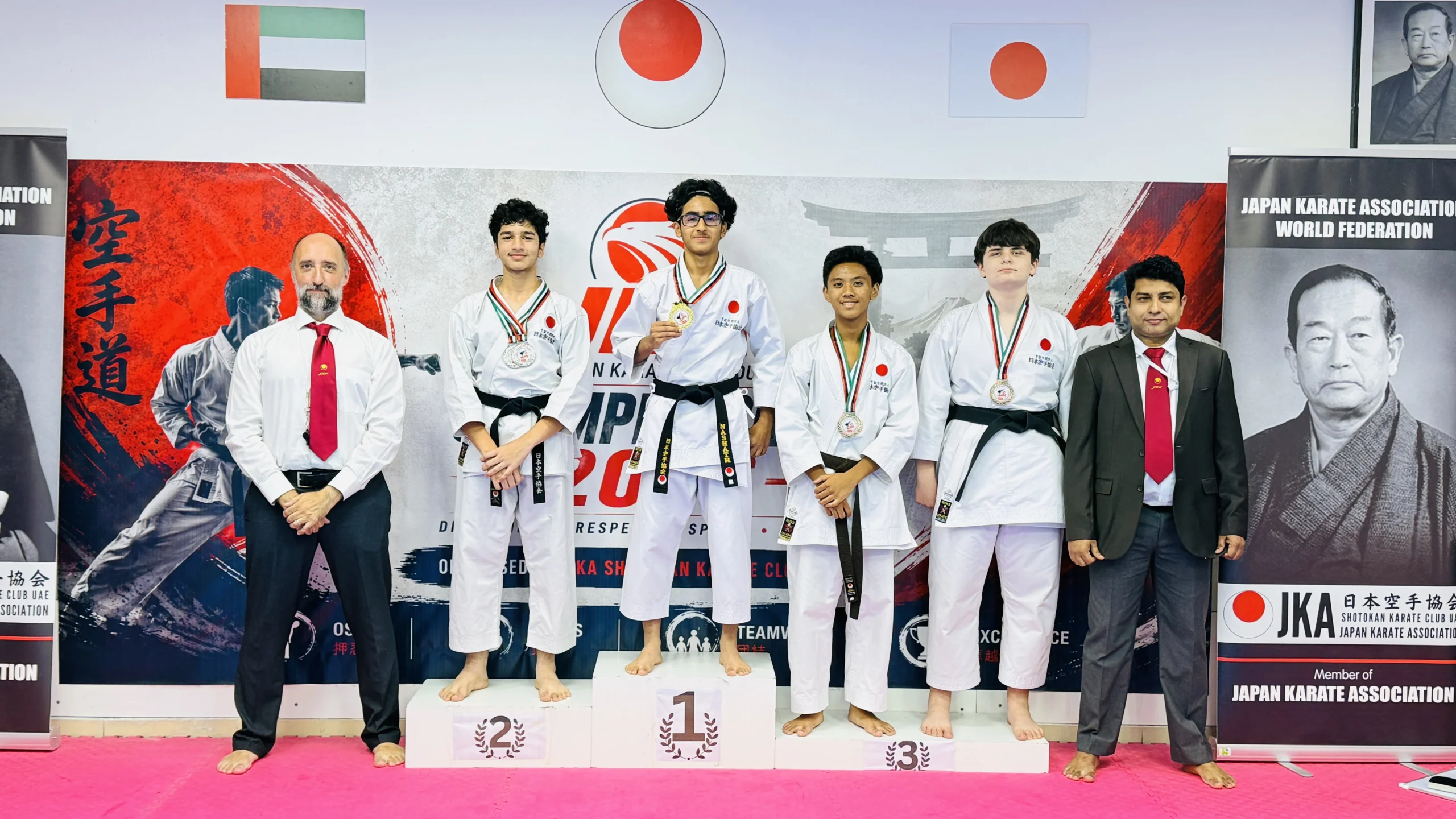
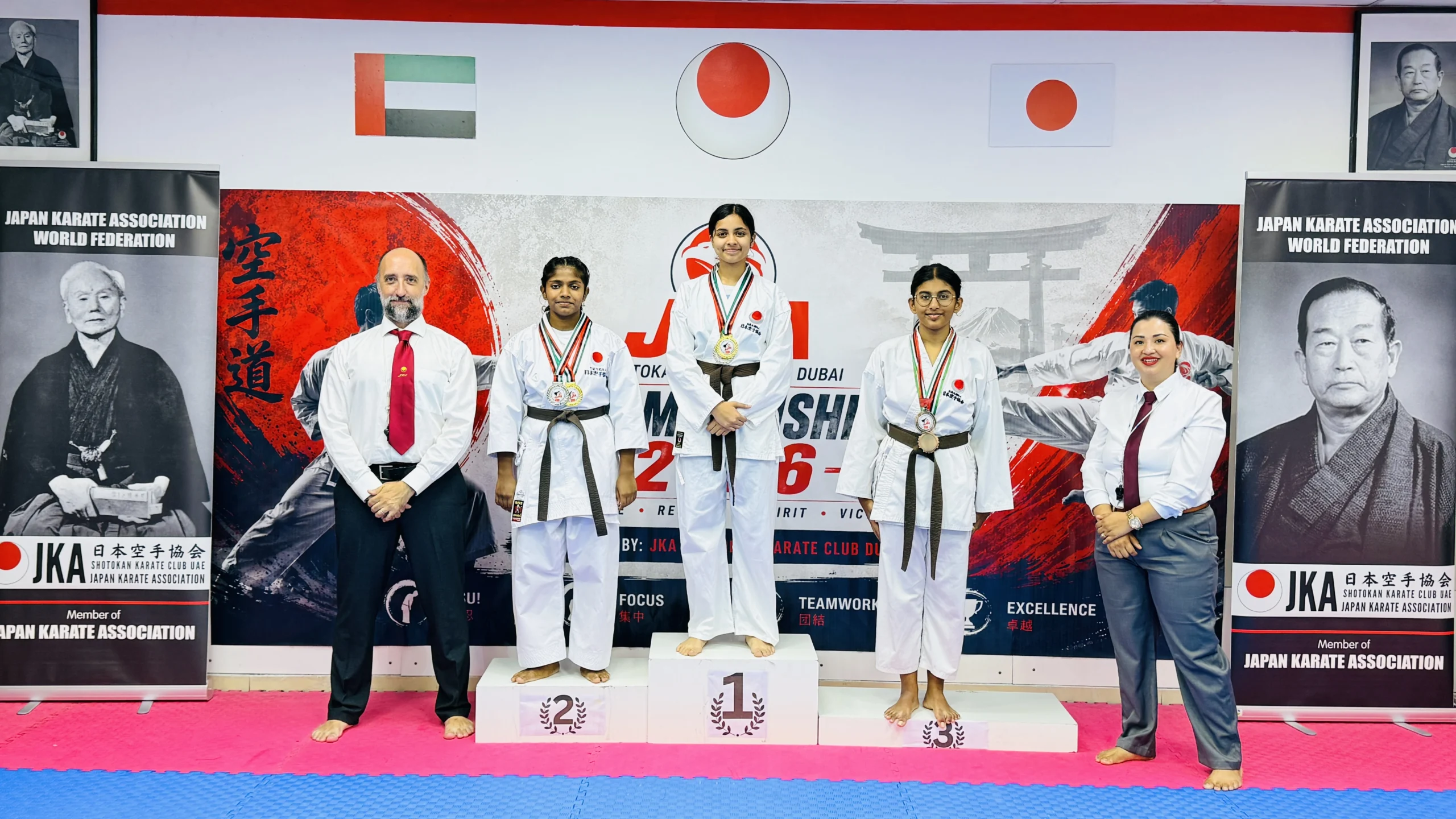
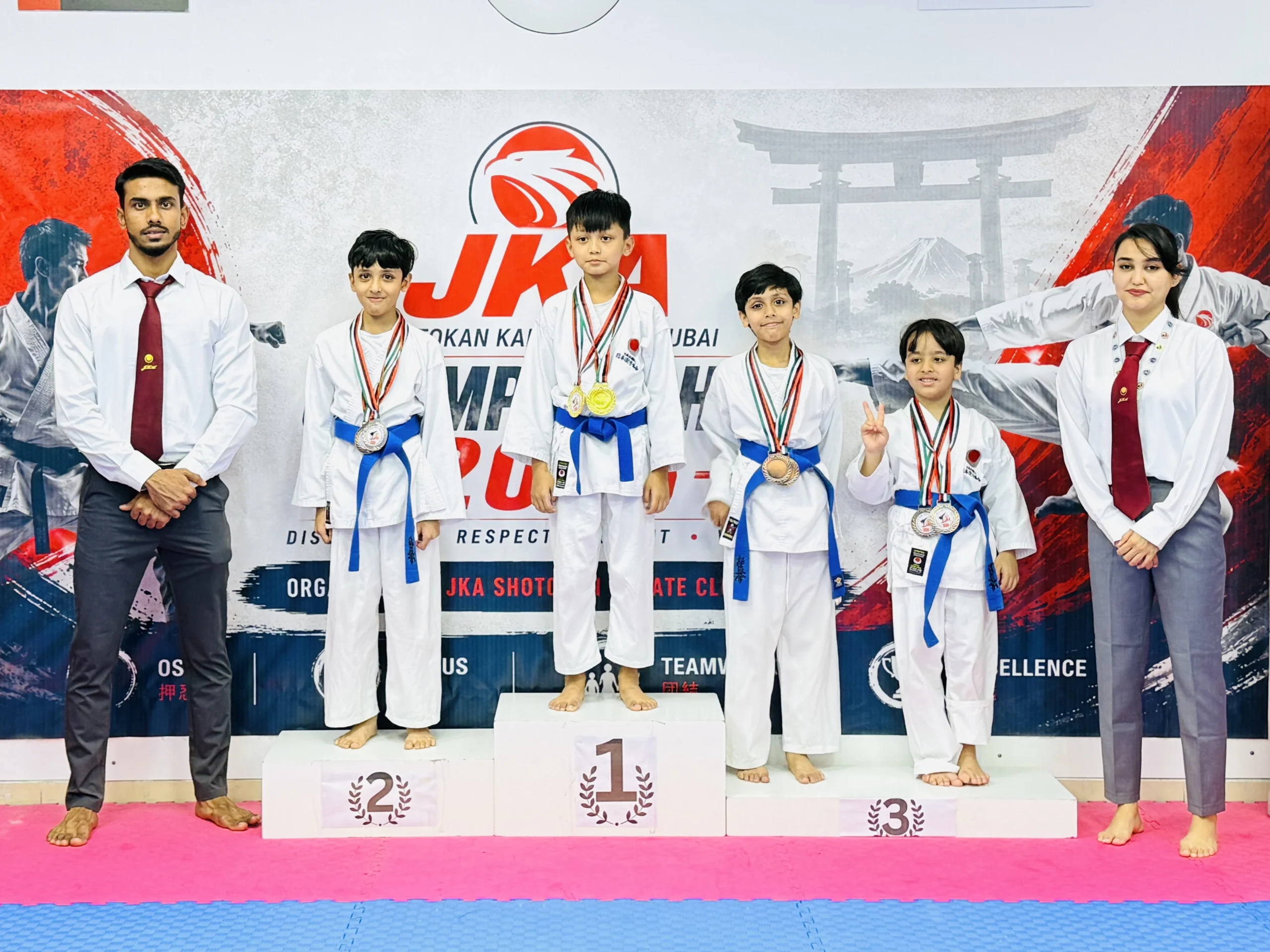
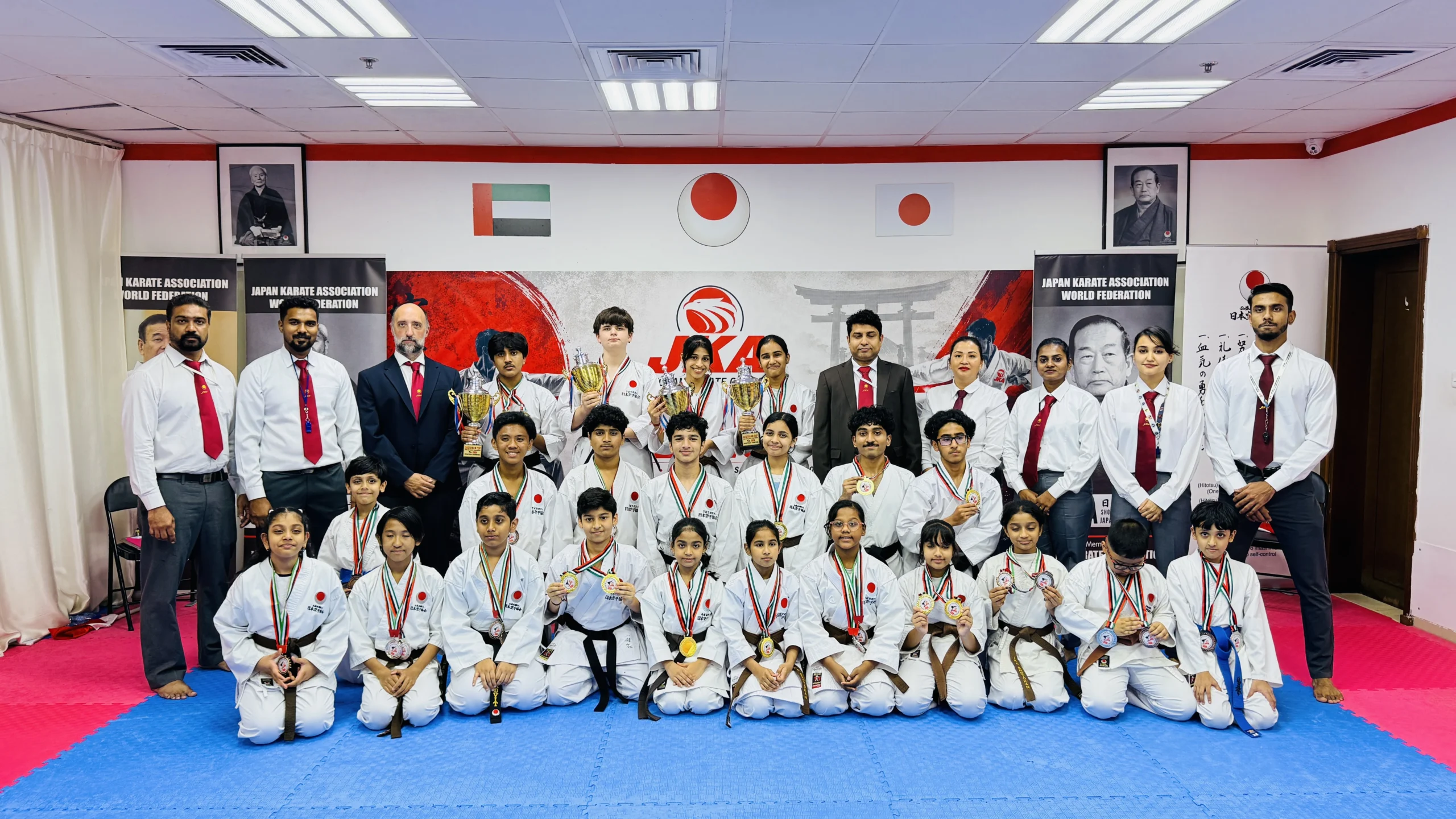
These recognitions celebrate competition performance, discipline, effort, character and consistent progress. Every child’s journey is different, and awards are only one of many ways students can grow through karate.
Champion of Champions

Aman Deepu
Aman’s achievement reflects consistent training, determination, technical development and the perseverance required to perform under competition pressure.
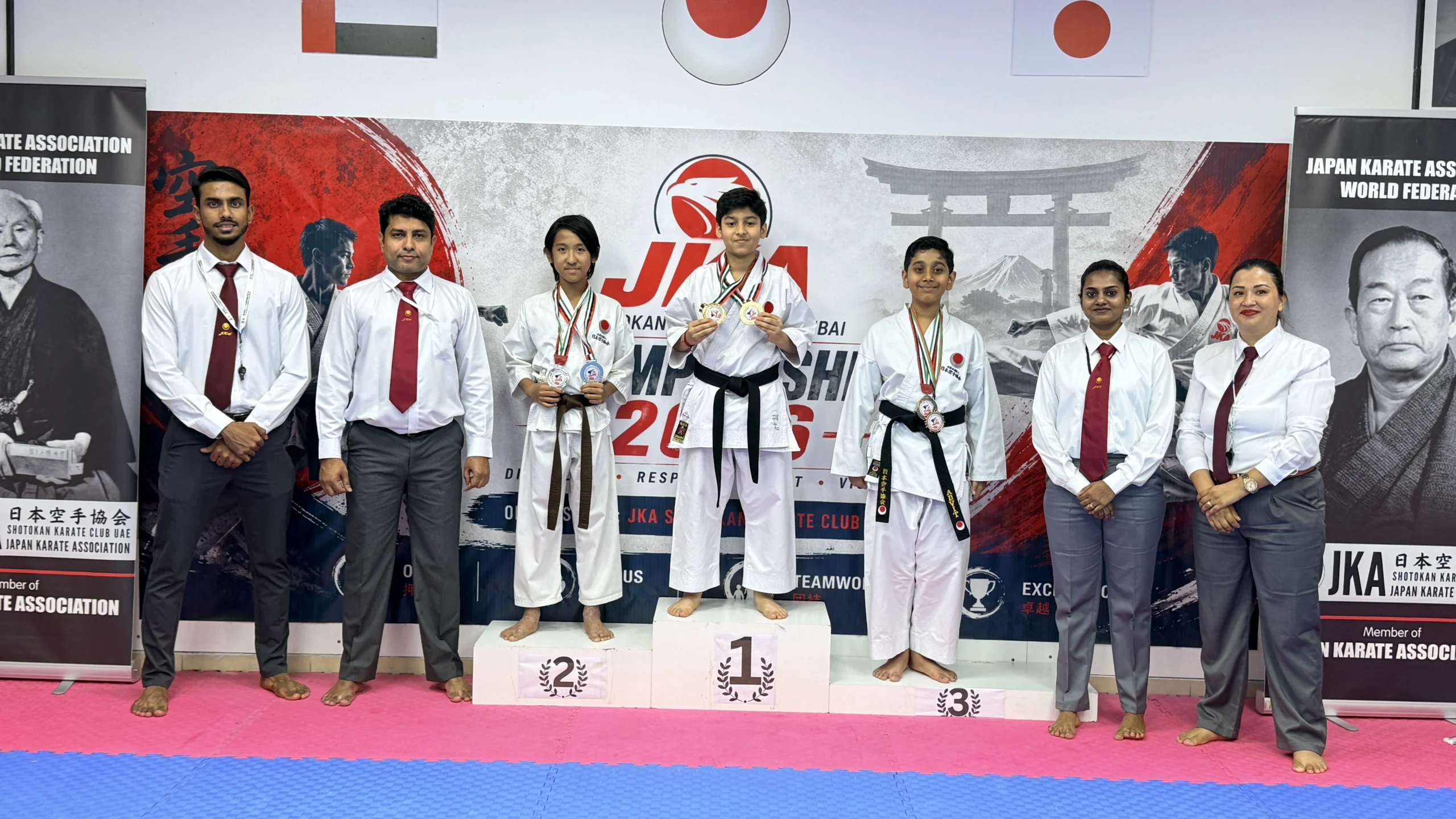
Vivaan Gohil
Vivaan earned recognition through focused preparation, commitment and strong karate performance, providing a positive example for younger students.

Vedika
Vedika’s success demonstrates how confidence, careful practice and consistent effort can develop into meaningful competitive achievement.
Best Students of the Year 2025–2026

Neya Pillai
Neya was recognised for discipline, respect, commitment and continuous improvement, reflecting the character and technical values encouraged in the dojo.

Jaxon
Jaxon earned this recognition through regular effort, a positive attitude, strong character and steady development throughout the training year.
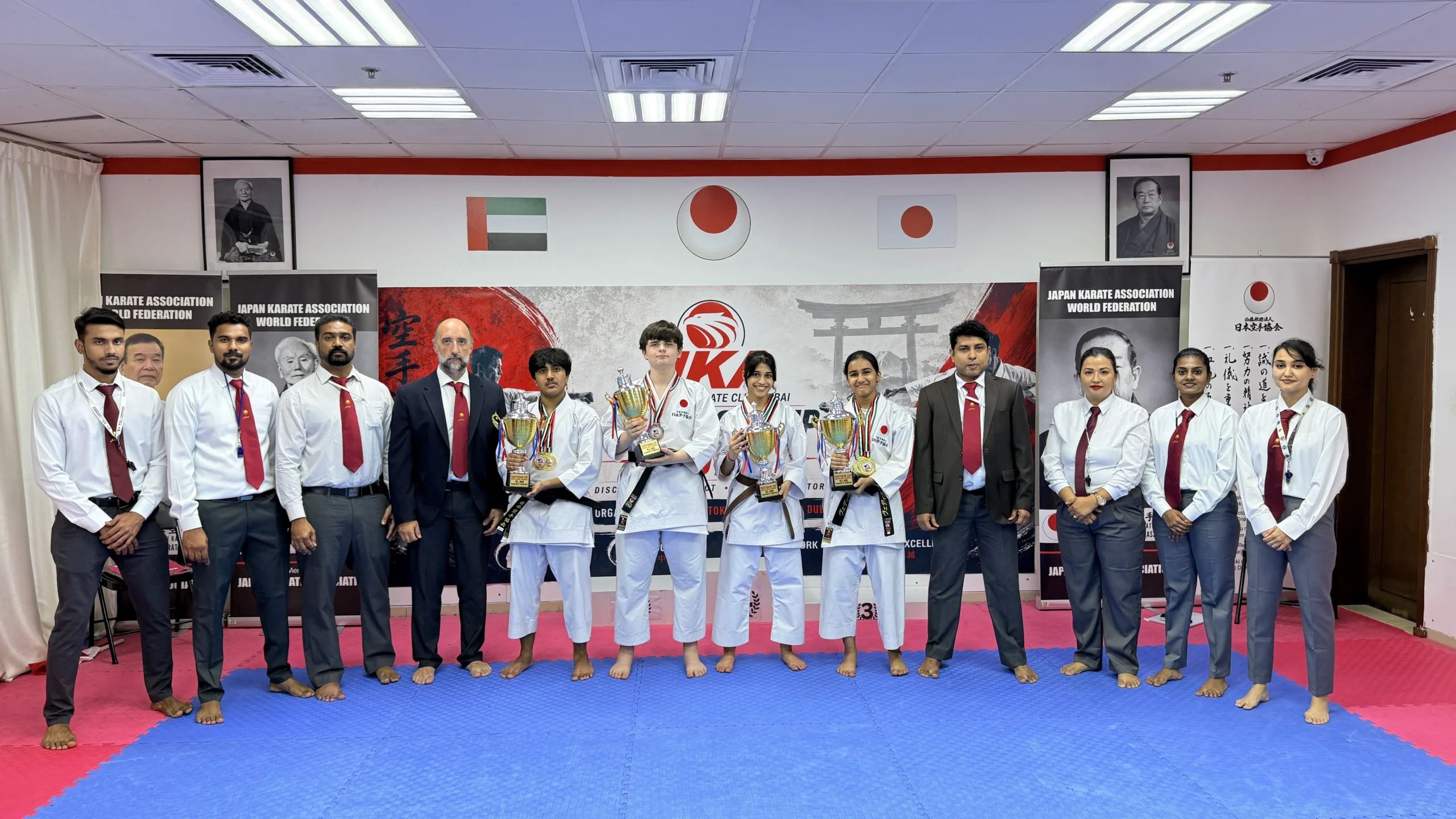
Opportunities from Dojo Events to International Championships
Students who enjoy competition and demonstrate appropriate readiness may receive opportunities to test their skills beyond regular classes. Competition is optional; many children train primarily for confidence, fitness, discipline and belt progression.
Skills Children Can Practise in Everyday Life
Karate creates repeated opportunities to practise useful habits. Families may notice progress gradually, and results vary according to the child, attendance, support and consistency.
School Focus
Listening, remembering sequences and completing structured tasks can reinforce attentive learning habits.
Handling Challenges
Children learn that mistakes are part of training and that improvement often requires repetition and patience.
Positive Confidence
Confidence is linked to preparation, skill and effort rather than comparison with other children.
Social Awareness
Partner exercises encourage communication, safe distance, cooperation and respect for different abilities.
Goal Setting
Students learn to work toward achievable milestones such as improved technique, kata performance or grading readiness.
Leadership
Experienced students may learn to demonstrate good behaviour, help beginners and accept greater responsibility.
Structured Training in a Controlled Dojo Environment
Safety starts with appropriate class placement, clear rules, progressive instruction and supervision. Beginners are not expected to perform advanced techniques immediately. Training intensity and partner work are adjusted according to age, level and readiness.
- Age-appropriate exercises and expectations
- Controlled technique and partner practice
- Progressive introduction to kumite
- Warm-up, mobility and movement preparation
- Clear etiquette and behaviour standards
- Instructor feedback before grading or competition
Parents should share relevant practical information that may affect safe participation. Karate is not a substitute for medical, psychological, educational or behavioural healthcare when professional support is needed.
Sensei Ameer Adukkattil
Shotokan Karate Club Dubai is led by Sensei Ameer Adukkattil, a 6th Dan Black Belt, WKF Accredited Coach and UAE Karate Federation Judge & Referee. He started karate in 1991 and brings more than 35 years of karate experience, including extensive experience teaching children, teenagers, adults and competitors.
Black Belt
Experience
In Dubai
Kids Karate Classes in Dubai Silicon Oasis and Al Nahda-2
Contact the nearest branch before visiting so the team can confirm the most suitable beginner, intermediate or advanced batch for your child.
Kids Karate at Palace Towers
Office 1102, Palace Towers, Dubai Silicon Oasis, Dubai, UAE
Convenient for families from Silicon Oasis, Academic City, Liwan, International City, Nad Al Sheba, Mirdif, Warsan and nearby communities.
Kids Karate at Ahli House-C
Office 203, Ahli House-C, Al Nahda-2, Al Qusais, Dubai, UAE
Convenient for families from Al Nahda, Al Qusais, Muhaisnah, Deira, Hor Al Anz, Abu Hail, Mamzar and Sharjah Al Nahda.
Useful Kids Karate Resources
Check branch details, current class timings and related child-development information before booking a trial.
Kids Karate Classes Dubai — Frequently Asked Questions
Clear answers for parents considering a first karate class.
What is the best age to start karate?
Does my child need previous martial arts experience?
Is karate safe for children?
Can karate help a shy child?
Can karate support confidence and discipline?
What does my child need for the first trial class?
How often should children attend?
How do karate belts work?
How long does it take to earn a black belt?
Does every child have to compete?
What competition opportunities are available?
Can parents watch the class?
What happens if my child misses classes?
Are classes suitable for both boys and girls?
Where are the kids karate classes located?
How can I book a free trial?
Help Your Child Begin a Positive Karate Journey
Book a beginner-friendly trial class and discover structured Shotokan karate for confidence, discipline, fitness, character and long-term development.